Contents
2Miners Bitcoin Solo Pool Is Now Live
Bitcoin needs no introduction. It is the first, most recognized, and most valuable cryptocurrency ever created. For years, miners have been asking us to add BTC. We finally did — but not as a regular PPLNS pool.
Want to skip straight to mining? Point your SHA-256 miner at solo-btc.2miners.l1q3urman.workers.dev:2626 set the worker to your Bitcoin wallet address, password x — and you are already in the game. The full guide is below.
Here is the honest reason we did not launch a regular Bitcoin PPLNS pool earlier: in BTC mining specifically, competing with giants like Foundry, AntPool, and F2Pool requires enormous pooled hashrate — we are talking hundreds of exahashes. With other coins we regularly outperform much larger pools, but Bitcoin is a different scale entirely. Without critical mass, miners in a small PPLNS pool face unpredictably long waits between blocks, which is unfair to our users. Disappointing miners is something we never want to do — we always stand behind our pools and the people who use them.
SOLO changes the equation. In solo mining, your machine works independently. If it finds a block, the full reward goes directly to you — the pool only provides the infrastructure. No competition for pool share, no diluted payouts. Our job is to keep the servers fast and reliable. That we do perfectly.
We have been proving this across more than 10 years of running mining pools for dozens of coins. And specifically on SHA-256, we already have three years of experience with Bitcoin Cash — running both PPLNS and SOLO without issues. The BTC solo pool is built on the same codebase and the same server infrastructure.
If you want to understand how solo mining works compared to PPLNS, read our detailed guide: Solo Mining Pools: How to Catch Your Luck.
Who Is BTC Solo For?
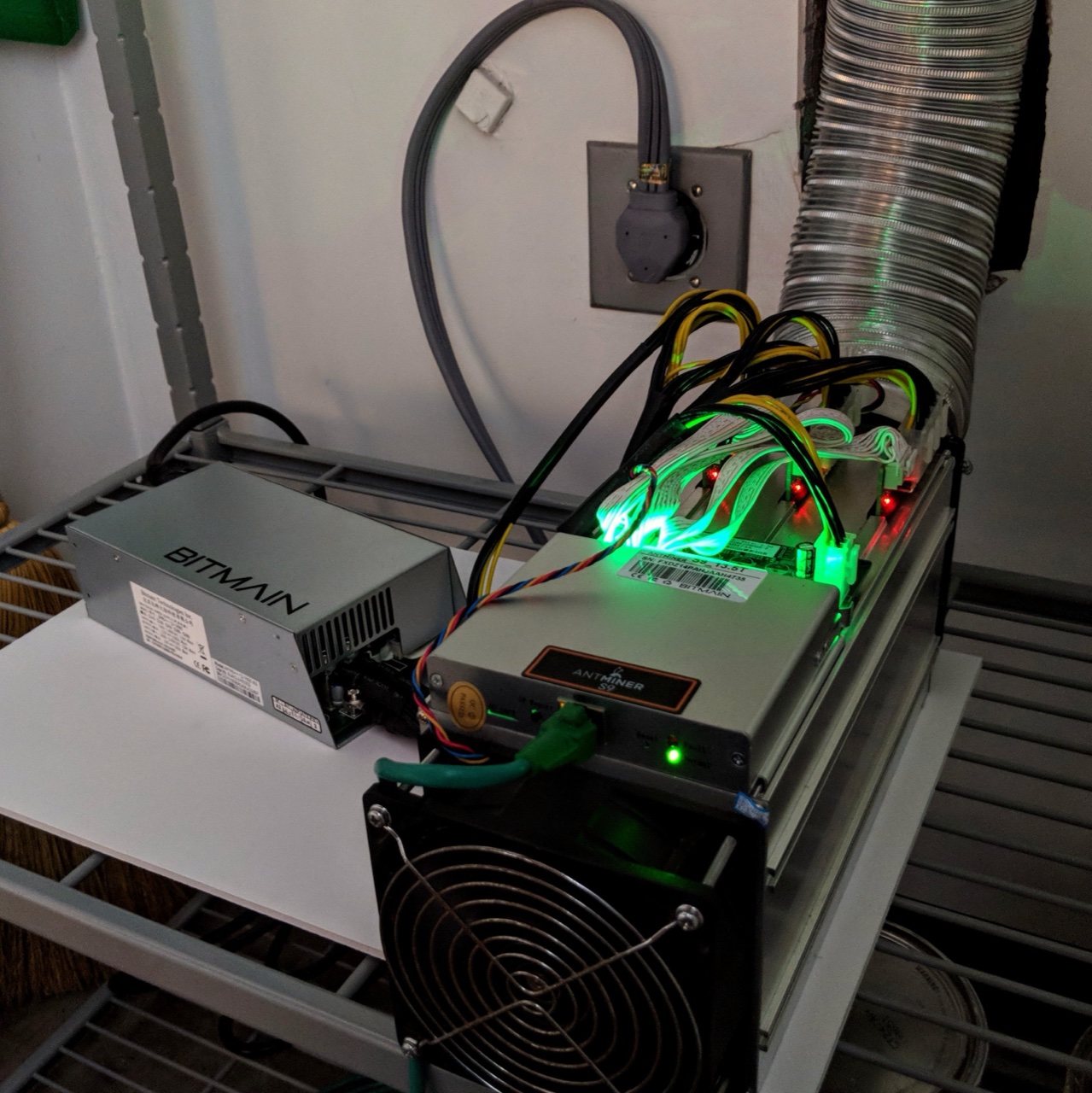
The 2Miners BTC solo pool is for anyone mining Bitcoin on SHA-256 hardware — from a single old ASIC on a shelf to a full warehouse operation.
- Old ASICs still running. An Antminer S9 delivers around 14 TH/s. In a regular pool at today’s difficulty, that earns almost nothing after electricity. On a solo pool, every hash is a real chance at the full block reward. The cost of trying is just your electricity bill.
- Large operations going solo. If you have serious hashrate and want to keep 100% of every block you find, this pool is ready. Our servers handle high-load connections without issue.
- Micro miners. A new category of compact, low-power devices built specifically for home solo mining. See the section below.
- Hashrate renters. You do not need your own hardware. Services like NiceHash and MiningRigRentals let you rent SHA-256 hashrate by the hour and point it at any solo pool. Buy a few terahashes for an afternoon and take your shot. The pool supports both services natively — setup instructions are on the help page.
Micro Bitcoin Miners
A growing category of open-source, low-power Bitcoin ASIC devices has emerged for exactly this use case. They run SHA-256, connect over Wi-Fi, draw between 1W and 160W, and cost anywhere from $15 to $500. Most are available on AliExpress, Amazon, and dedicated retailers worldwide. These are real miners pointing at a real pool — not simulations.
NerdMiner V2
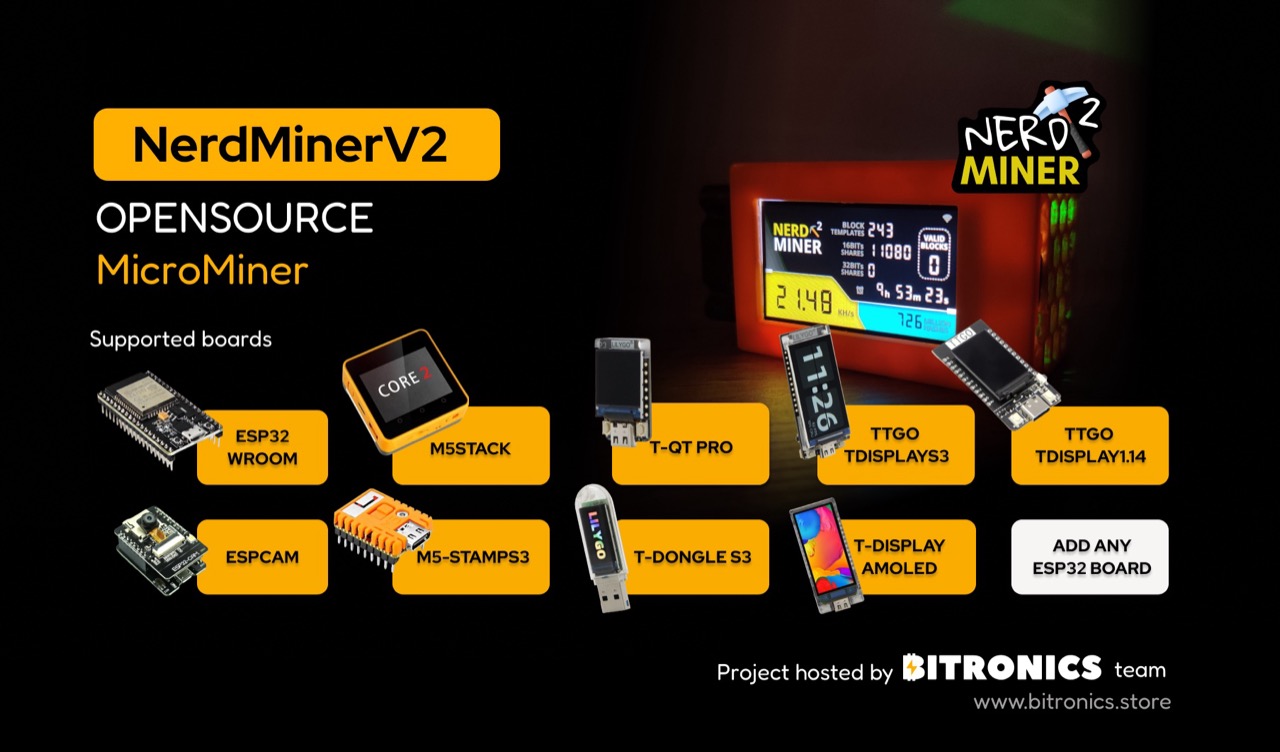
The NerdMiner V2 is an ESP32-based open-source device that costs around $15–30 on AliExpress. It runs the SHA-256 algorithm at roughly 55–300 KH/s depending on the version, drawing about 1–5W. It fits in your hand, makes no noise, and runs off a USB cable.
This is the most affordable entry into Bitcoin solo mining. The odds of finding a block are astronomically small — but the electricity cost is essentially zero, and the device doubles as a live Bitcoin network display on your desk.
Bitaxe Gamma 602
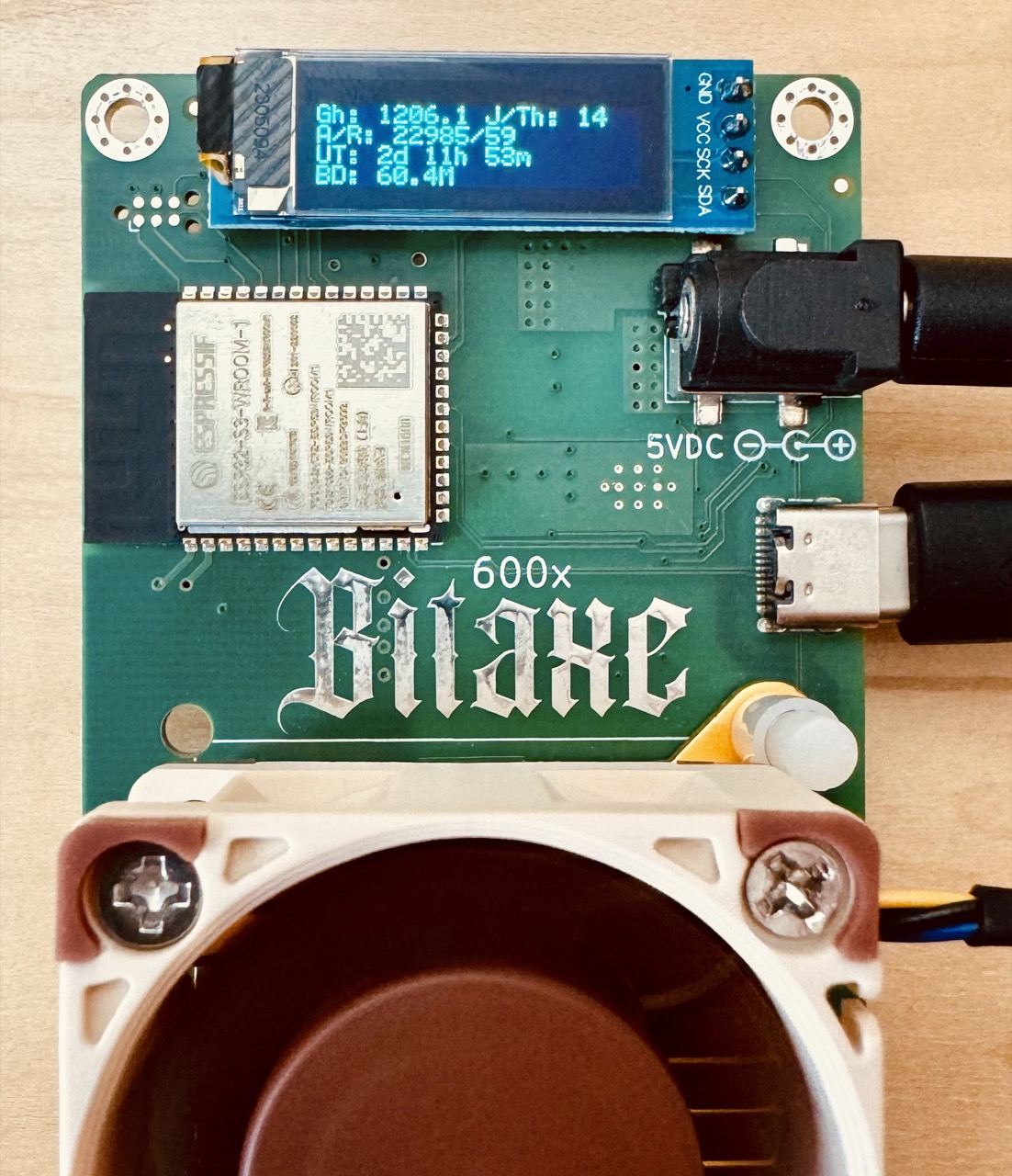
The Bitaxe Gamma is a proper open-source ASIC miner built around the BM1370 chip — the same chip used in the Bitmain Antminer S21 Pro. It delivers 1.1 TH/s at approximately 18W and costs around $77. Setup takes under five minutes via a browser-based interface called AxeOS.
This is not a toy. In November 2025, a cluster of six Bitaxe Gamma units found Bitcoin block #924,569 and earned 3.08 BTC — worth approximately $266,000 at the time.
NerdQaxe++
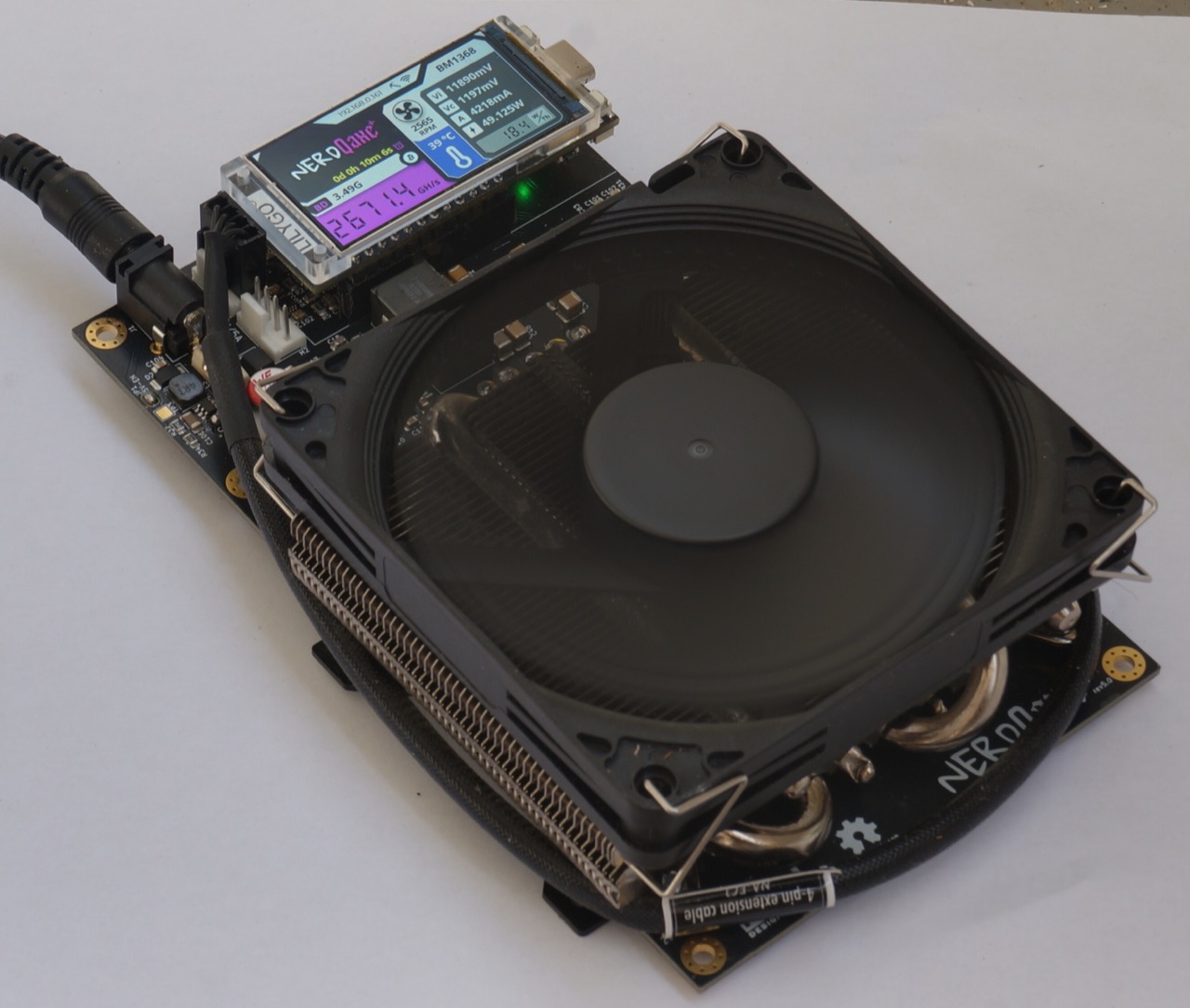
The NerdQaxe++ puts four BM1370 chips on a single board, delivering around 4.8 TH/s at approximately 35W. It is one of the most efficient devices in this category — similar hashrate to several old-generation ASICs, but in a quiet desktop form factor. Available from multiple open-source hardware retailers.
Canaan Avalon Nano 3S
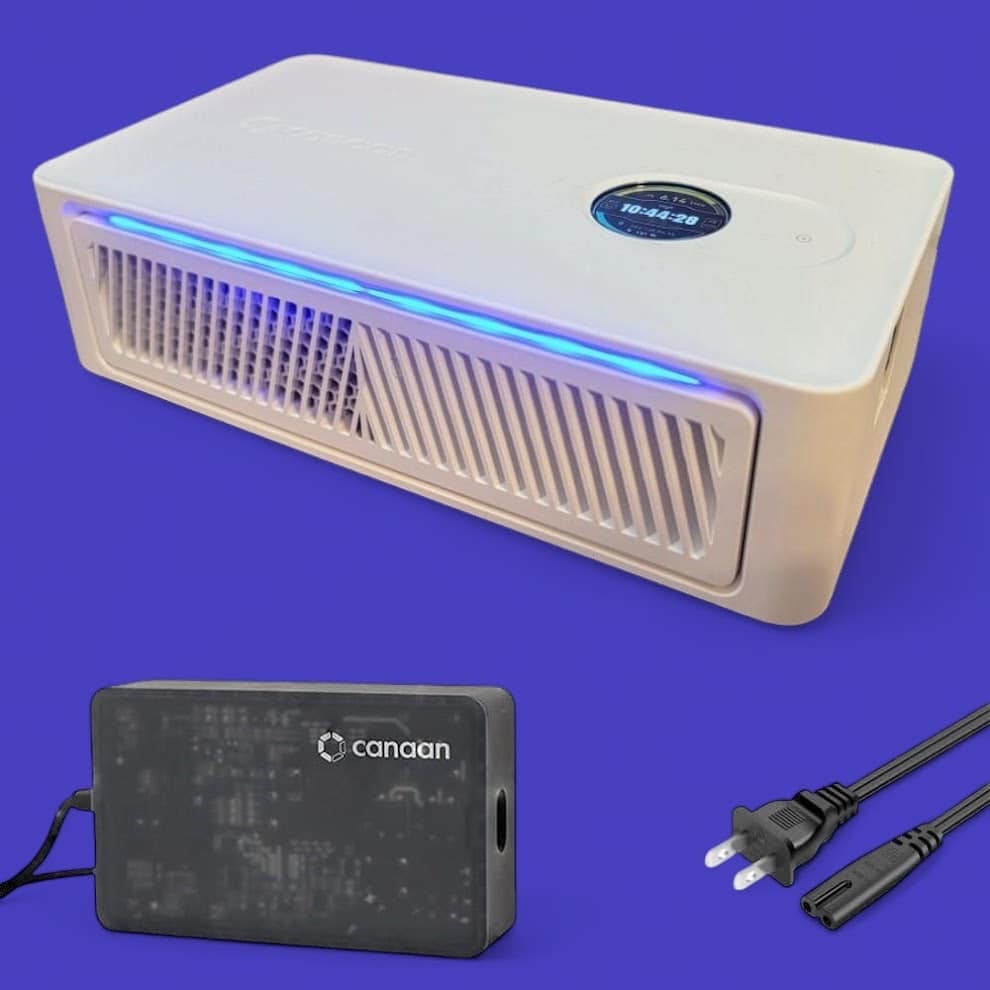
The Canaan Avalon Nano 3S is a commercial compact miner with a built-in touchscreen, delivering around 6 TH/s. Unlike the open-source Bitaxe family, it comes fully assembled from Canaan — the same company that manufactures large industrial Bitcoin miners. A good option if you prefer a polished consumer product over open-source hardware.
The 2Miners BTC solo pool runs dedicated servers in three regions:
- Europe: solo-btc.2miners.l1q3urman.workers.dev
- USA: us-solo-btc.2miners.l1q3urman.workers.dev
- Asia: asia-solo-btc.2miners.l1q3urman.workers.dev
Fee: 1.5% — among the lowest available for BTC solo mining.
Each region offers three share difficulty levels: 524K, 1M, and 16M. If you are unsure, use 524K. Use 16M if you are connecting via NiceHash or have very high hashrate.
An important note: share difficulty does not affect your rewards in any way. In solo mining, what matters is whether your miner finds a valid block — shares are just how the pool measures activity and plots your hashrate graph. A lower difficulty means more frequent share submissions and smoother statistics. A higher difficulty means each share takes longer to find but carries more weight. You can read the full explanation in our article: What is Share and Share Difficulty.
In practice, pick a difficulty level where your miner submits a share roughly every one to two minutes. This gives you a clean hashrate graph without unnecessary network traffic — useful if your connection is slow or unstable.
How to Start Mining Bitcoin Solo on 2Miners
Step 1 — Create a Bitcoin wallet. We recommend Bitcoin Core for desktop, or a hardware wallet — Ledger, Trezor, or Jade — for maximum security. If neither is an option, any mobile wallet works: Trust Wallet, Exodus, BlueWallet, or similar. You can also mine directly to any exchange address — obviously, every major exchange supports Bitcoin deposits.
The pool supports all Bitcoin address formats:
- SegWit (native bech32): bc1qnkyhslv83yyp0q0suxw0uj3lg9drgqq9c0auzc
- Compatibility (P2SH): 3GRdnTq18LyNveWa1gQJcgp8qEnzijv5vR
- Legacy: 1A1zP1eP5QGefi2DMPTfTL5SLmv7DivfNa
Step 2 — Configure your miner. Use the settings below. Replace YOUR_WALLET_ADDRESS with your actual address.
- Pool 1 (Europe): solo-btc.2miners.l1q3urman.workers.dev:2626
- Pool 2 (USA): us-solo-btc.2miners.l1q3urman.workers.dev:2626
- Pool 3 (Asia): asia-solo-btc.2miners.l1q3urman.workers.dev:2626
- Worker: YOUR_WALLET_ADDRESS
- Password: x
For Bitaxe and NerdMiner devices, enter the same stratum address in the AxeOS web interface. Algorithm: SHA256. Full setup guide including SSL connections and NiceHash/MiningRigRentals configuration: solo-btc.2miners.l1q3urman.workers.dev/help.
Step 3 — Check your stats. As soon as your miner submits its first share, your statistics will be available at solo-btc.2miners.l1q3urman.workers.dev — just enter your wallet address. You can also monitor your workers in real time using the 2Miners mobile app: iOS and Android.
Calculate Your Odds
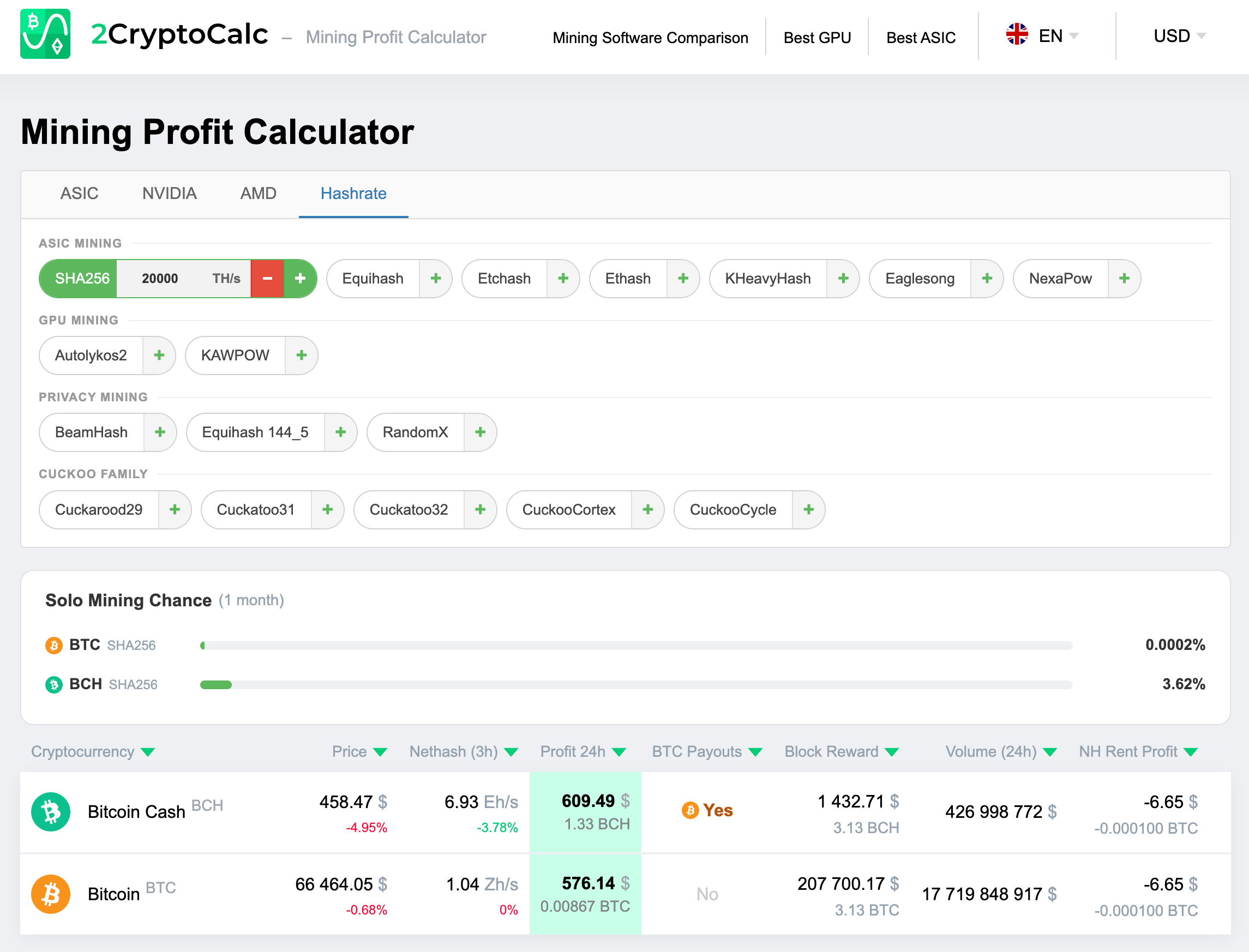
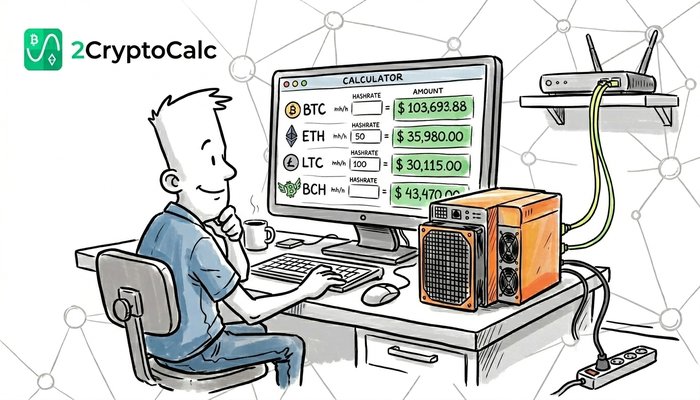
Use 2CryptoCalc to estimate your probability based on your hashrate and the current network difficulty.
An Antminer S9 at 14 TH/s has roughly a 1 in 1.273B chance of finding a block in any given month. Long odds — but a real number, not zero.
And it happens. Solo miners with a handful of terahashes have found blocks. The Bitaxe cluster example above is real. Every hash you submit is a valid lottery entry.
The prize is not just 3.125 BTC. Bitcoin miners also collect all transaction fees included in the block. At current network activity, a freshly mined block is typically worth $200,000 or more in total. That is the jackpot your miner is working toward, around the clock, for the cost of electricity.
Stay Updated
Follow us on X (Twitter) and join our Telegram chat to stay informed about new developments, miner alerts, and network upgrades.